About Me
Greetings, and welcome to my humble corner of the web... a little about me... I am a full-time engineer by day and I moonlight as a part-time math & science instructor. My hobbies... I'm a bit of an information junkie... I love learning about and exploring all things... art, culture, history, literature, music, philosophy, science, and the interconnectedness of all things. I volunteer some of my time working with a non-profit and college students to deliver bridges and clean water systems to remote communities in Africa and South America. I was lucky enough to grow up a 90s kid, conveniently in a relatively optimistic and worry-free time after the Cold War, and before the 9/11 and Climate Change eras... as my most gratuitous indulgement, I operate an historical replay baseball league called the Wayback Baseball Syndicate.
What I'm reading...
- Millard Fillmore: Biography of a President by Robert J. Rayback
- Bread of Angels: A Memoir by Patti Smith
- A Man in Love: My Struggle: Book Two by Karl Ove Knausgård
- The Royal Game (aka Chess Story) by Stefan Zweig
- Why Fish Don't Exist: A Story of Loss, Love, and the Hidden Order of Life by Lulu Miller
What I'm watching...
- The National Parks: America's Best Idea (documentary by Ken Burns)
What I'm listening to...
- pillow talk by Wet Leg
- Blue Yodel no. 8, Mule Skinner Blues by Jimmie Rodgers
- Lua by Bright Eyes
- Ogallala by Hurray for the Riff Raff
- They Might Be Giants discography
Journal
A periodic dump of various datum and detritus that I encounter in my daily ramblings...
2026.02.15... Modern Protest Songs Sound Opinions podcast 𓅆 Time is Honey Radiolab podcast 𓅆 The Veiled Christ by Giuseppe Sanmartino 𓅆
Books
"I think we ought to read only the kind of books that wound or stab us. If the book we're reading doesn't wake us up with a blow to the head, what are we reading for? So that it will make us happy, as you write? Good Lord, we would be happy precisely if we had no books, and the kind of books that make us happy are the kind we could write ourselves if we had to. But we need books that affect us like a disaster, that grieve us deeply, like the death of someone we loved more than ourselves, like being banished into forests far from everyone, like a suicide. A book must be the axe for the frozen sea within us. That is my belief." - Franz Kafka
My love for reading and books is predates my memory. The childrens' picture book book I recall loving first is The Big Orange Splot by Daniel Pinkwater, a story of self-expression and community, and challenging the idea of conformity. Greek myths and historical biographies marked my reading journey in early grade school. In middle school, I stepped into the world of adult literature with Stephen King's Needful Things, provoked mainly by my parents' prohibition. But the most pivotal moment of my reading journey occured in highschool... assigned Don Quixote (Part One), I, like my classmates, yielding to laziness and dishonesty, opted to read the CliffsNotes, and seemingly got away with it, although it's likely my teacher was not unaware. This act however haunted me into my college years, when as an act of penance I decided to read Don Quixote (Parts One and Two). This was the reading experience that changed me as a reader... to turn over as many rocks as I could find: the experiemental, the transgressive, the challenging, the slogs, the uncomfortable. For my next progression as a reader, I turned to reading projects... first the Modern Library's 100 Best Novels (1998), which introduced me to the fruits of self-imposed reading, outside of what I thought I liked. Next, I worked thru The 20th Century’s Greatest Hits: 100 English-Language Books of Fiction... McCaffery's list introduced me to the experimental and transgressive. Present day, I've re-engaged my love of American History, electing to read a biography of every US President. While the focus of each book is the respective president's life, the repetetive overlap in time and change in perspective and focus offers a counteraction to my awful memory, and challenge to assumptions and pre-established opinion. What I look for in a reading presently... experimentalism, transgression, the punk ethos, the voiceless, history, science, art, travel, the plotless, love for everything, Americana, discomfort, foreign, furnished with rabbit holes. Genre-wise... I indulge in classic noir/pulp, the post-modern, picareqsue, historical fiction, American westerns.
My favorite writers... William T. Vollmann, Cormac McCarthy, James Ellroy, Richard Ford, Philip Roth, Marilynne Robinson, Dashiell Hammett, Raymond Chandler, Jonathan Franzen, Jim Thompson, Henry David Thoreau, John Irving, Richard Powers, H.P. Lovecraft, E.L. Doctorow, W.G. Sebald, James Michener, Don DeLillo, Joyce Carol Oates, Thomas Pynchon, Charles Bukowski, Bret Easton Ellis, Haruki Murakami. Forgive the absence of
Music
Music is my cure-all. I love it all (despite my Eurocentracism)... classical, folk, jazz, blues, country-western/Americana, rock (Hail! Hail! Rock 'n' Roll and All Sub-Genre's), hop-hop/rap... the history, stories, culture, etc. inform my listening, and I'm guided by my belief in listenting to anything and everything that I don't like, or I think I will not like.
Film
My favorite films...
The Apartment (1960)
Directed by: Billy Wilder
Starring: Jack Lemmon, Shirley MacLaine, Fred MacMurray
Genre: Romantic Comedy / Drama
Summary: C.C. "Bud" Baxter is a lonely "9-to-5" office drone who has found a questionable way to climb the corporate ladder at a massive New York insurance firm: he lends his Upper West Side apartment to his philandering superiors for their extramarital affairs. While he waits on street corners for his home to be vacated, Bud nurtures a crush on Fran Kubelik, the charming elevator operator. The arrangement takes a dark and complicated turn when Bud discovers that Fran is the mistress of the company’s powerful personnel director, J.D. Sheldrake. As the cynical office politics collide with a genuine suicide attempt and a blossoming romance, Bud is forced to choose between his career ambitions and his integrity, finally deciding what it means to be a "mensch."

From Here to Eternity (1951)
Directed by: Fred Zinnemann
Starring: Burt Lancaster, Montgomery Clift, Deborah Kerr, Donna Reed, Frank Sinatra
Genre: War / Romance / Drama
Summary: Set in 1941 Hawaii in the days leading up to the attack on Pearl Harbor, the film follows the turbulent lives of several soldiers stationed at Schofield Barracks. Private Robert E. Lee Prewitt, a talented boxer and bugler, transfers into the unit but refuses to fight for the company team, leading to a brutal "treatment" by his superiors. Parallel to Prewitt’s struggle, the weary First Sergeant Milton Warden risks a court-martial by engaging in a passionate, illicit affair with Karen Holmes, the neglected and frustrated wife of his commanding officer. As these men and women navigate personal demons, forbidden loves, and military rigidness, their world is irrevocably shattered by the sudden Japanese air raid, forcing them to face the ultimate test of their character and duty.

Mulholland Drive (2001)
Directed by: David Lynch
Starring: Naomi Watts, Laura Elena Harring, Justin Theroux
Genre: Neo-Noir / Mystery / Psychological Thriller
Summary: Betty Elms is a wide-eyed, aspiring actress who arrives in Los Angeles with big dreams, only to find a mysterious woman hiding in her aunt's apartment. The woman, suffering from amnesia following a brutal car accident on Mulholland Drive, takes the name "Rita" from a movie poster. Together, the two embark on a surreal journey through the underbelly of Hollywood to piece together Rita’s true identity, guided by a blue key and a series of increasingly bizarre encounters. As the narrative fractures, the bright "old Hollywood" dream transforms into a fragmented nightmare. Director David Lynch blurs the lines between reality, memory, and subconscious desire, challenging the viewer to distinguish between what is a performance and what is the truth. The film is a haunting meditation on the corrupting nature of fame and the tragic distance between the life we dream of and the life we lead.

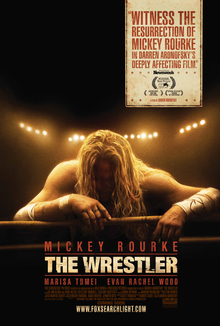
The Wrestler (2008)
Directed by: Darren Aronofsky
Starring: Mickey Rourke, Marisa Tomei, Evan Rachel Wood
Genre: Sports Drama / Character Study
Summary: Robin Ramzinski, better known by his ring name "Randy 'The Ram' Robinson," is a washed-up professional wrestling icon living a shadowed existence two decades after his prime. Health failing and living in a trailer park, Randy scrapes by performing in small-time independent matches for die-hard fans while working a mundane day job at a supermarket deli. After a brutal "hardcore" match leads to a heart attack, Randy is forced into a forced retirement that leaves him drifting. He attempts to build a life outside the ring by pursuing a romance with a local stripper named Cassidy and reconciling with his estranged, resentful daughter, Stephanie. However, the pull of the spotlight and the only sense of self-worth he has ever known, the roar of the crowd, proves too strong to resist, leading to a climactic and heartbreaking choice about his legacy versus his survival.
Dr. Strangelove or: How I Learned to Stop Worrying and Love the Bomb (1964)
Directed by: Stanley Kubrick
Starring: Peter Sellers (in three roles), George C. Scott, Sterling Hayden, Slim Pickens
Genre: Political Satire / Black Comedy
Summary: At the height of the Cold War, the unthinkable happens: Brigadier General Jack D. Ripper, a delusional commander convinced of a Soviet conspiracy to "sap and impurify" American fluids, goes rogue and orders a full-scale nuclear strike on the USSR. Because of the "Wing Attack Plan R," the B-52 bombers cannot be recalled unless a secret three-letter code is provided, a code known only to the mad General. Inside the Pentagon's "War Room," a frantic President Merkin Muffley tries to manage a room full of eccentric advisors, including the gung-ho General Buck Turgidson and the titular Dr. Strangelove, a wheelchair-bound ex-Nazi scientist with a mind of his own. As the world teeters on the edge of total annihilation via a Soviet "Doomsday Machine," the film brilliantly skewers military paranoia, political ineptitude, and the absurdity of mutually assured destruction.

Life Is Beautiful (La Vita è Bella) (1997)
Directed by: Roberto Benigni
Starring: Roberto Benigni, Nicoletta Braschi, Giorgio Cantarini
Genre: Comedy / War / Drama
Summary: Guido Orefice is a charming, bumbling Jewish-Italian waiter whose boundless imagination and infectious wit help him win the heart of a schoolteacher named Dora. Their lives together are filled with joy and the birth of their young son, Giosuè. However, their idyllic world is shattered when the family is deported to a concentration camp during World War II. Determined to shield his son from the horrors of the Holocaust, Guido uses his humor and creativity to convince Giosuè that their imprisonment is actually an elaborate, high-stakes game. In this "contest," the prisoners must follow strict rules to earn points, with the ultimate grand prize being a real army tank. It is a profoundly moving story about the power of the human spirit, the resilience of hope, and a father's ultimate sacrifice to preserve his child's innocence amidst darkness.

Mars Attacks! (1996)
Directed by: Tim Burton
Starring: Jack Nicholson, Glenn Close, Annette Bening, Pierce Brosnan, Danny DeVito
Genre: Sci-Fi / Dark Comedy
Summary: Inspired by the graphic Topps trading card series from the 1960s, this campy, star-studded satire kicks off when a fleet of flying saucers from Mars surrounds the Earth. Despite the optimistic efforts of the U.S. President and peaceful scientists to welcome the visitors, the big-brained, cackling Martians reveal they have absolutely no intention of "coming in peace." What follows is a chaotic, neon-colored global invasion where the invaders use shrink-rays and disintegrators to gleefully lay waste to world monuments and Congress alike. As the military's conventional weapons prove useless against the Martian technology, the survival of the human race unexpectedly falls to a group of eclectic survivors, including a Kansas teenager and his grandmother, who discover a hilariously bizarre acoustic weakness that might just save the planet.

Cool Hand Luke (1967)
Directed by: Stuart Rosenberg
Starring: Paul Newman, George Kennedy, Strother Martin
Genre: Prison Drama / Crime
Summary: Lucas "Luke" Jackson is a decorated war veteran turned rebellious drifter who is sentenced to two years on a Southern chain gang for a drunken bout of cutting the heads off parking meters. In a world defined by grueling labor and the rigid authority of "The Captain," Luke’s refusal to let his spirit be broken earns him the respect of his fellow inmates, led by the tough-talking Dragline, and the nickname "Cool Hand." Luke becomes a symbol of hope and defiance through legendary feats, like winning a bet by eating 50 hard-boiled eggs in an hour. However, his repeated escape attempts and his refusal to submit to the "bosses" lead to a brutal psychological and physical battle of wills. The film is a poignant exploration of the individual versus the system, famously immortalizing the struggle between a man who won't quit and an establishment that demands "his mind be right."

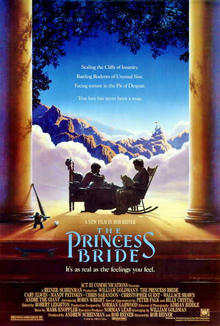
The Princess Bride (1987)
Directed by: Rob Reiner
Starring: Cary Elwes, Robin Wright, Mandy Patinkin, Chris Sarandon, André the Giant
Genre: Adventure / Fantasy / Romance / Comedy
Summary: Framed as a storybook being read by a grandfather to his sick grandson, this beloved cult classic tells the tale of Buttercup, a beautiful young woman in the kingdom of Florin, and her "farm boy" Westley. After Westley leaves to seek his fortune and is presumably killed by the Dread Pirate Roberts, a heartbroken Buttercup is forced into an engagement with the conniving Prince Humperdinck. However, "death cannot stop true love," and Westley returns in disguise to rescue Buttercup from a trio of eccentric outlaws, a vengeful Spanish fencer, a gentle giant, and a criminal mastermind. What follows is a swashbuckling journey filled with Rodents of Unusual Size, Fire Swamps, and Miracles. It’s a quintessential fairy tale that manages to be both a sincere romance and a sharp parody of the genre, proving that "as you wish" are the most romantic words in any language.
Art
Podcasts
A Shrine for William T. Vollmann
Articles
The Last Untamed Writer in America (The Wall Street Journal)
A hitchhiker’s guide to America with author William T. Vollmann (The Daily Californian)
Four Men: Keeping company with outdoor people (Harper's Magazine)
The Curious Case of William T. Vollmann (Sactown Magazine)
‘I Try Not to Have a Schedule’: Talking Writing with William Vollmann (Longreads)
The Adventurous Life of William T. Vollmann, Writer (WNYC)
The Sympathetic Guide to William T. Vollmann (Hazlitt)
Life as a Terrorist: Uncovering my FBI file (The New Republic)
A MODEST IMPERIALIST: William T. Vollmann (The Brooklyn Rail)
An Oral History of William Vollmann’s Rising Up and Rising Down (McSweeney's)
A Playlist of Interviews, Readings, and Such
* click in top, right-hand corner for listing
C-SPAN Videos
2019 American Book Awards: Book TV presented coverage of the 40th annual American Book Awards that recognizes “outstanding literary achievement from the entire spectrum of America’s diverse literary community.”
No Immediate Danger and No Good Alternative: William Vollmann provided his research on the causes for climate change. He was joined in conversation by Michelle Romero, worker advocate and national director of Green For All.
Poor People: William Vollmann talked about his book Poor People, published by HarperCollins. Mr. Vollman traveled all over the world, asking people why they are poor. In this book he records the answers, and his reflections on the answers. The book explores how poor people live and investigates similarities and differences among the poor in various nations. Mr. Vollmann was interviewed on stage by Mr. Greenfeld, who as the editor of TIME Asia worked with Mr. Vollmann. Mr. Vollman also answered questions from members of the audience. The program opens and closes with a two-minute montage of photographs from the book. This Richard B. Salomon Distinguished Lecture at LIVE from the NYPL was co-presented by the National Book Awards.
2005 National Book Awards: The National Book Foundation presented the 56th Annual National Book Awards for best book in each of the categories of fiction, nonfiction, poetry, and young people's literature... William Vollmann, author of Europe Central (fiction).
Books
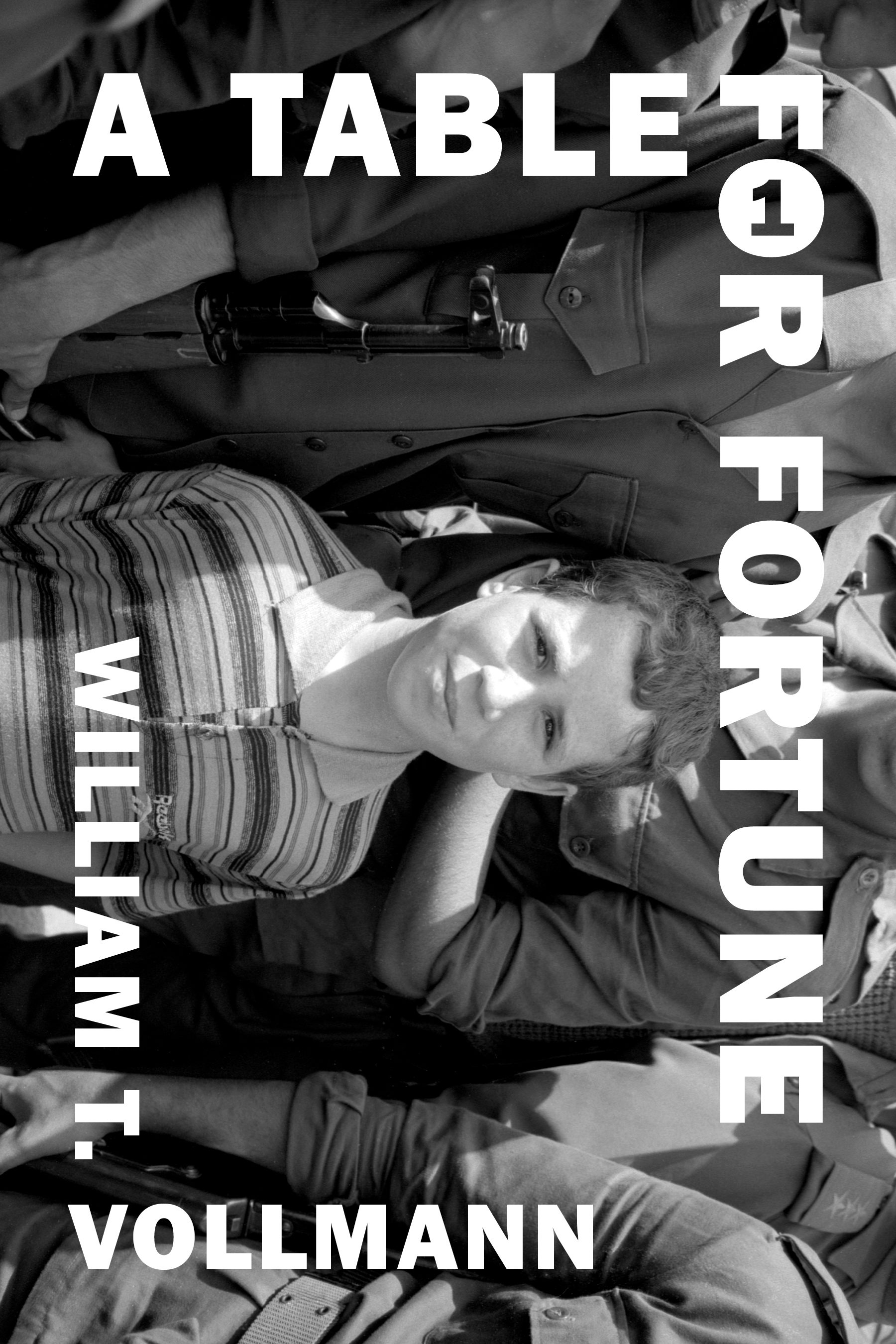
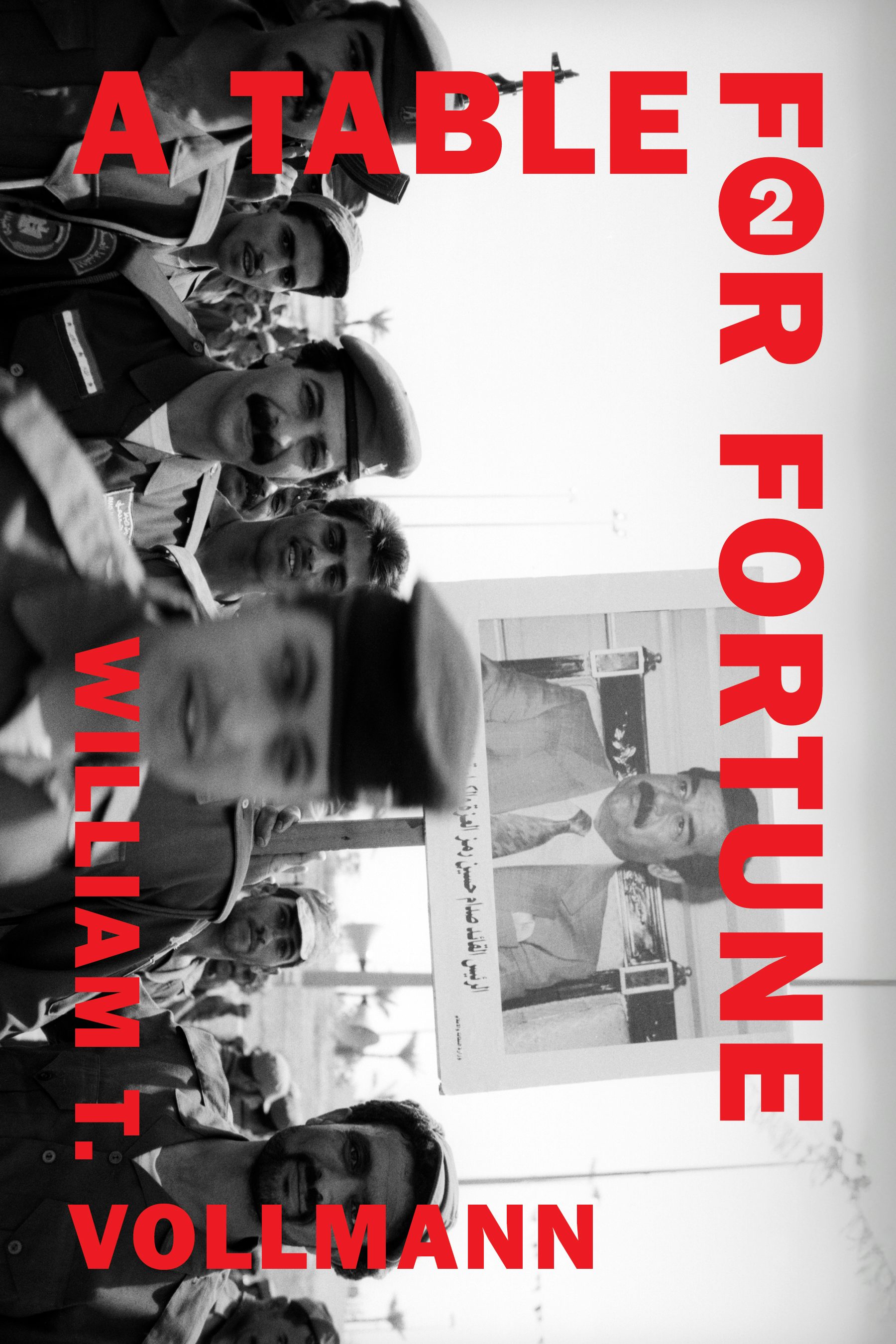
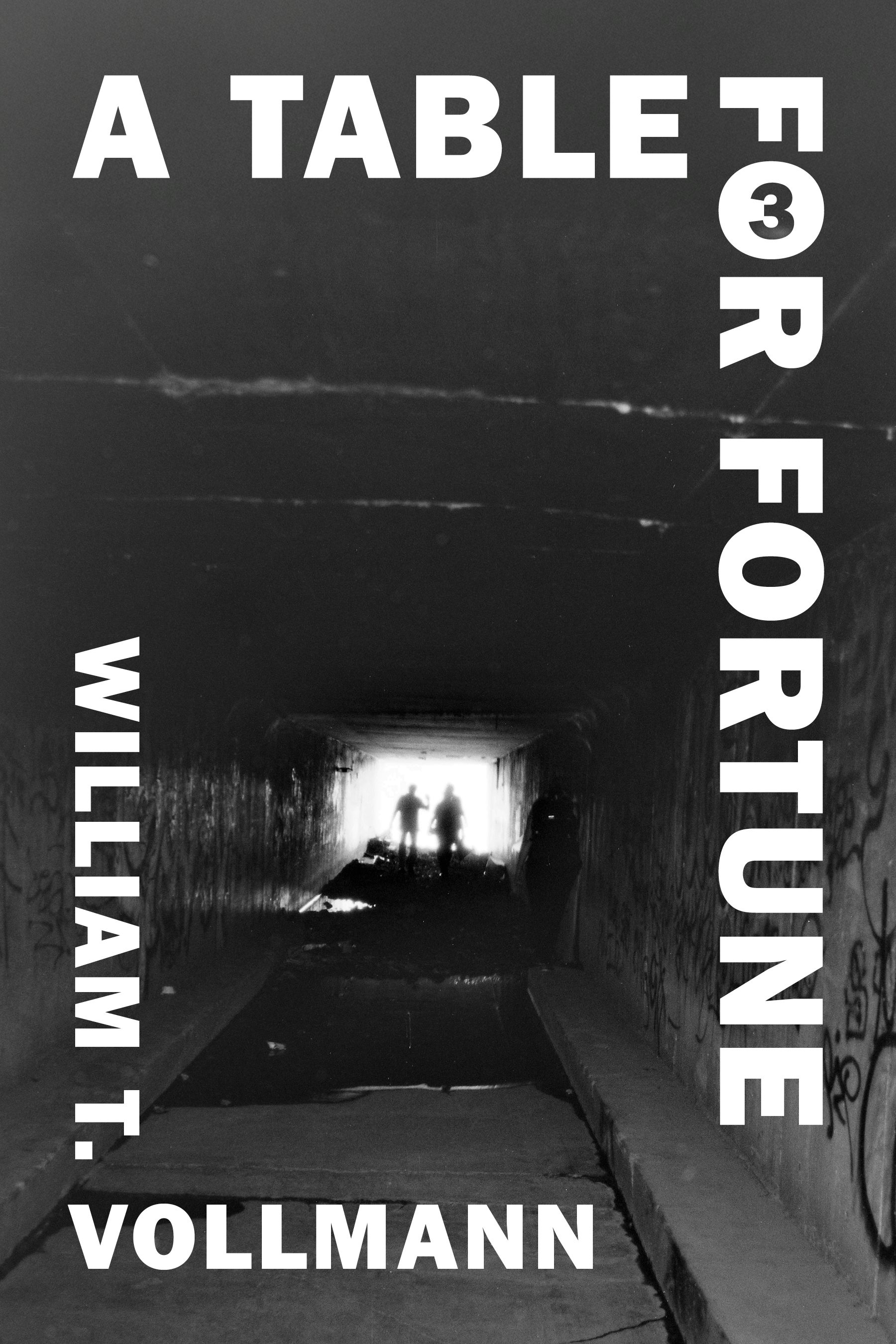
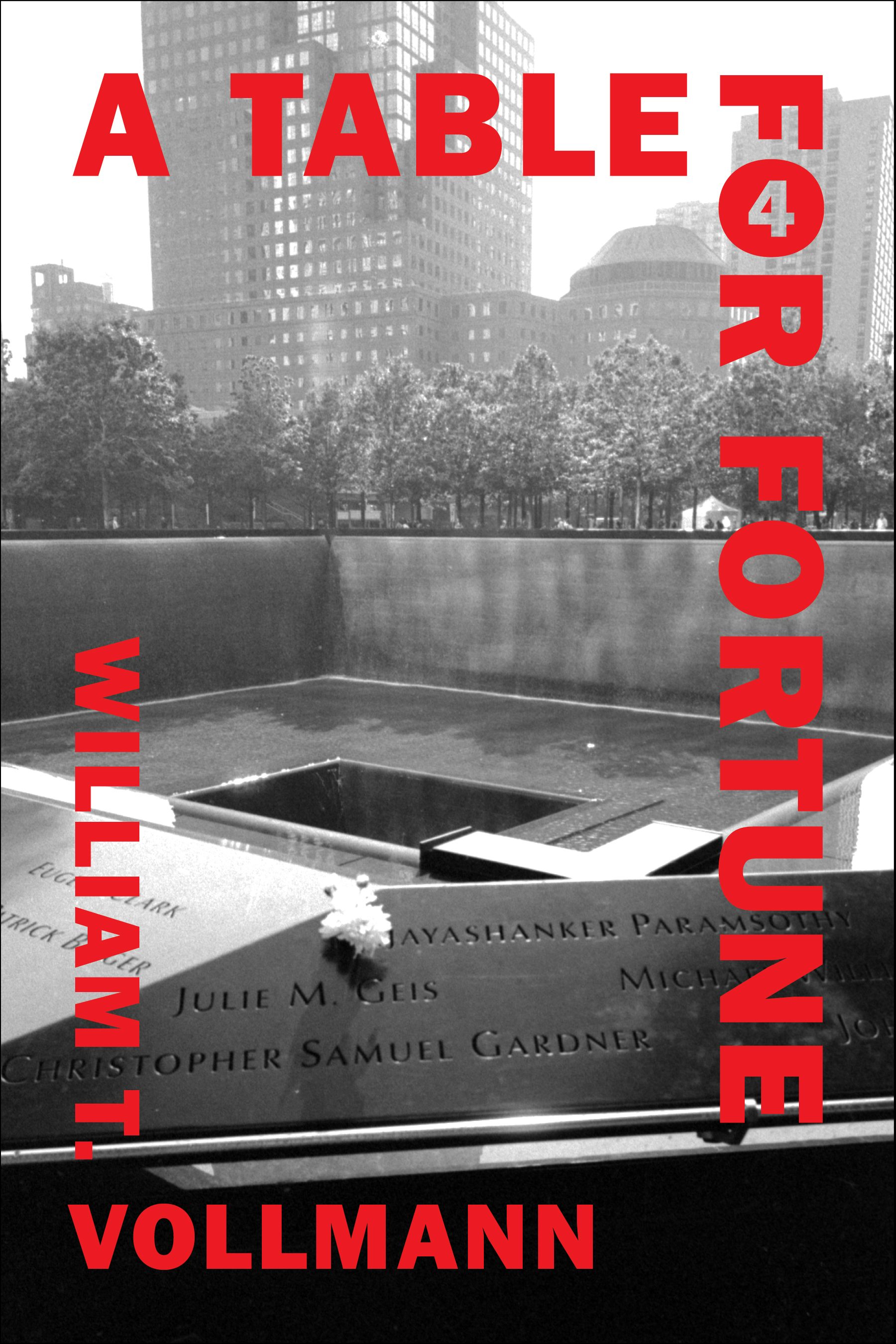
A Table for Fortune (2026)
In A Table for Fortune, National Book Award-winner William T. Vollmann depicts from the balcony-level of history the last half-century of American politics, war, and life. At once a family drama, bildungsroman, and national epic, this 3,000+ page, four-part novel may be our most ambitious writer's most ambitious work.
Shadows of Love, Shadows of Loneliness (2023)
In this landmark collection, William T. Vollmann offers a kaleidoscopic retrospective of the visual artwork he has produced over four decades, with new commentary from Vollmann on his process, inspiration, and the many intersections with his writing.

The Lucky Star (2020)
A novel set in the dive bars and clubs of San Francisco, focusing on a group of marginalized characters and their "Lucky Star", a woman they believe can save them. It explores themes of celebrity, gender fluidity, and communal salvation.

No Good Alternative: Carbon Ideologies, Vol. 2 (2018)
The second half of his exhaustive study on climate change, energy production, and the human cost of our reliance on fossil fuels.

No Immediate Danger: Carbon Ideologies, Vol. 1 (2018)
The first volume of his climate change treatise, focusing heavily on nuclear power and the Fukushima disaster, written with a characteristic mix of data and immersive reporting.

The Dying Grass (2015)
The fifth book in the Seven Dreams cycle. This 1,300-page novel covers the Nez Perce War of 1877, utilizing a unique, staggered prose style to simulate the overlapping voices of history.

Last Stories and Other Stories (2014)
In this magnificent new work of fiction, Vollmann offers a collection of ghost stories linked by themes of love, death, and the erotic.


The Book of Dolores (2013)
A photographic and self-reflexive study of Vollmann's "cross-dressing" alter ego, Dolores, exploring gender identity and the performance of femininity.

Into the Forbidden Zone: A Trip through Hell and High Water in Post-earthquake Japan (2011)
A reportage piece on the aftermath of the Fukushima nuclear disaster in Japan.


Kissing the Mask: Beauty, Understatement, and Femininity in Japanese Noh Theater (2010)
A deep dive into Japanese Noh theater, exploring the concepts of beauty, understatement, and femininity.

Imperial (2009)
A 1,300-page examination of Imperial County, California, and the border region between the US and Mexico. It blends history, geology, and investigative journalism.


Riding Toward Everywhere (2008)
A nonfiction account of Vollmann’s experiences "train-hopping" across America, reflecting on the concept of freedom and the American landscape.


Poor People: Understanding Voices of Dignity, Resilience, and the Causes of Impoverishment (2007)
A follow-up to his treatise on violence, this nonfiction work asks people across the globe why they are poor, examining the cultural and personal definitions of poverty.


Uncentering the Earth: Copernicus and The Revolutions of the Heavenly Spheres (2006)
A nonfiction book about Nicolaus Copernicus and the scientific revolution, part of the "Great Discoveries" series.


Europe Central (2005)
Winner of the National Book Award. In this magnificent work of fiction, William T. Vollmann turns his trenchant eye to the authoritarian cultures of Germany and the USSR in the twentieth century. Assembling a composite portrait of these two warring leviathans and the terrible age they defined, the narrative intertwines experiences both real and fictional, a young German who joins the SS to expose its crimes, two generals who collaborate with the enemy for different reasons, the Soviet composer Dmitri Shostakovich laboring under Stalinist oppression. Through these and other lives, Vollmann offers a daring and mesmerizing perspective on human actions during wartime.


Expelled from Eden: A William T. Vollmann Reader (2004)
A curated collection of excerpts from his previous works, along with essays and interviews.

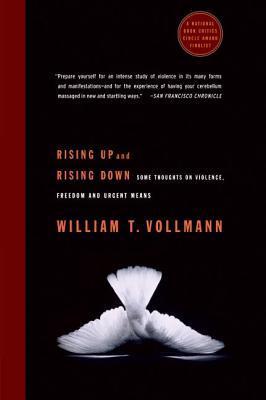
Rising Up and Rising Down (2003)
A labor of seventeen years, Vollmann's first book of nonfiction since 1992's An Afghanistan Picture Show is a gravely urgent invitation to look back at the world's long, bloody path and find some threads of meaning, wisdom, and guidance to plot a moral course. From the street violence of prostitutes and junkies to the centuries-long battles between the Native Americans and European colonists, Vollmann's mesmerizing imagery and compelling logic is presented with authority born of astounding research and personal experience.

Argall: The True Story of Pocahontas and Captain John Smith (2001)
In Argall, the third novel in his Seven Dreams series, William T. Vollmann alternates between extravagant Elizabethan language and gritty realism in an attempt to dig beneath the legend surrounding Pocahontas, John Smith, and the founding of the Jamestown colony in Virginia - as well as the betrayals, disappointments, and atrocities behind it. With the same panoramic vision, mythic sensibility, and stylistic daring that he brought to the previous novels in the Seven Dreams series - hailed upon its inception as "the most important literary project of the '90s" ( The Washington Post ) - Vollmann continues his hugely original fictional history of the clash of Native Americans and Europeans in the New World. In reconstructing America's past as tragedy, nightmare, and bloody spectacle, Vollmann does nothing less than reinvent the American novel.

The Royal Family (2000)
A sprawling novel set in the San Francisco underworld, often considered the final installment of his unofficial "Prostitution Trilogy."


The Atlas (1996)
A collection of 53 interconnected stories and travelogues that span the globe, blurring the line between fiction and documentary.


The Rifles (1994)
The story of John Franklin’s doomed 1845 attempt to discover a Northwest Passage, from the National Book Award-winning author of Europe Central. Vaulting through time to another flashpoint in the long struggle between Indians and Europeans, William T. Vollmann's visionary fictional history now focuses on the white explorers of the mid-1800s, desperately dreaming of forging a Northwest Passage. As Sir John Franklin embarks on his fourth Arctic voyage, he defies the warnings of the native people, and his journey ends in ice and death. But his spirit lingers in the Canadian north, where 150 years later, in 1990, Inuit elders dream of long-gone seal-hunting days and teenagers sniff gasoline. And when a white man seduces and leaves pregnant a young Indian woman, he becomes Franklin reincarnated, bound for the same fate. Vollmann's vivid characters and landscapes weave together the stories of the past and present to live out America's ongoing tragedy of greed, ignorance, and violence.


Butterfly Stories (1993)
A novel following a journalist’s obsession with sex workers in Southeast Asia; the second part of his "Prostitution Trilogy."


An Afghanistan Picture Show: Or, How I Saved the World (1992)
A nonfiction account of Vollmann’s young, idealistic attempt to join the mujahideen in Afghanistan in the early 1980s.


Fathers and Crows: A Book of North American Landscapes (1992)
With the same panoramic vision and mythic sensibility he brought to The Ice-Shirt, William T. Vollmann continues his hugely original fictional history of the clash of Indians and Europeans in the New World. It is 400 years ago, and the Black Gowns, French Jesuit priests, are beginning their descent into the forests of Canada, eagerly seeking to convert the Huron - and courting martyrdom at the hands of the rival Iroquois. Through the eyes of these vastly different peoples - particularly through those of the grimly pious Father Jean de Brebeuf and the Indian prophetess Born Underwater - Vollmann reconstructs America's past as tragedy, nightmare, and bloody spectacle. In the process, he does nothing less than reinvent the American novel as well.


Whores for Gloria (1991)
A short, gritty novel about a man in San Francisco’s Tenderloin district who tries to "reconstruct" a woman named Gloria through the stories of others.


Thirteen Stories and Thirteen Epitaphs (1991)
The settings for the stories in Vollmann's collection range from Las Vegas to Bangkok, but his protagonists share traits in common. They are the desperate, the haunted, those who have reached the end of their ropes and are trying to make sense of a world that has failed them. The prostitutes and pimps, the addicts and the skinheads, who are the subjects of Vollmann's stories are all engaged in larger journeys of self-discovery. The hope that the next fix, the next night of sex, the next trip abroad will finally lead them to an always allusive internal peace.


The Ice-Shirt (1990)
The first volume of the Seven Dreams cycle, detailing the Norse arrival in North America and the clash of myths. The time is the tenth century A.D. The newcomers are a proud and bloody-minded people whose kings once changed themselves into wolves. The Norse have advanced as implacably as a glacier from Iceland to the wastes of Greenland and from there to the place they call Vinland the Good. The natives are a bronze-skinned race who have not yet discovered iron and still see themselves as part of nature. As William T. Vollmann tells the converging stories of these two peoples and of the Norsewomen Freydis and Gudrid, whose venomous rivalry brings frost into paradise he creates a tour-de-force of speculative history, a vivid amalgam of Icelandic saga, Inuit creation myth, and contemporary travel writing that yields a new an utterly original vision of our continent and its past.


The Rainbow Stories (1989)
From a writer who has won comparison with Thomas Pynchon and William S. Burroughs comes thirteen unnerving and often breathtaking stories populated by punks and angels, skinheads and religious assassins, streetwalkers and fetishists--people who live outside the law and and the clear light of the every day. Set in landscapes as diverse as ancient Babylon, India, and the seamy underbelly of San Francisco, these daring and innovative tales are laced with Vollman's fertile imagination. The Rainbow Stories ushers us into a world that bears an awful yet hypnotic resemblance to that of our deepest nightmares, confirming Vollmann's reputation as a dark visionary of contemporary fiction.


You Bright and Risen Angels (1987)
In the jungles of South America, on the ice fields of Alaska, the plains of the Midwest, and the streets of San Francisco, a fearsome battle rages. The insects are vying for world domination; the inventors of electricity stand in evil opposition. Bug , a young man, rebels against his own kind and joins forces with the insects. Wayne, a thug, allies himself with the malevolent forces of electricity and vows to assassinate the preying mantis who tends bar in Oregon. A brusque La Pasionara with the sprightly name of Millie leads an intrepid band of revolutionaries. You Bright and Risen Angels is the work of an extraordinary imagination. In this free-wheeling novel of epic proportions, William T. Vollmann has crafted a biting, hilarious satire of history, technology, politics, and misguided love.


Friends
Credits